Bit breaker gameplay guide
Core gameplay loop: brick-breaking meets incremental bullet hell

Source: Steam
Bit Breaker takes the familiar brick-breaking setup, layers an incremental upgrade economy on top, and drops you into a bullet hell arena where every paddle position matters. The result is a short but dense experience that keeps you moving, collecting, and spending resources at a steady clip. The core sequence repeats throughout every session:
Break bricks with your balls to clear space and trigger resource drops.
Collect resources while dodging projectiles fired by nearby nodes.
Spend resources on ball upgrades and unlocks between encounters.
Push forward into new node territory, which raises both the reward and the hazard level.
"Bit Breaker is a short brick-breaking incremental bullet hell. Collect resources to upgrade your balls and fight back against the nodes taking over humanity."
Because the game is playable without timed input, the pressure comes from positioning and resource priority rather than twitch reactions. You still need to read bullet patterns, but the game gives you room to plan your next upgrade mid-fight.

Combat and exploration: fighting the nodes with your balls
The nodes are the hostile force "taking over humanity," and your balls are the only thing standing between them and the board. Combat is not just about reflecting bricks; it is about aiming ball trajectories at node weak points while avoiding the bullets they spray back.
Each node behaves differently depending on its position and how long it has been allowed to spread. Early nodes are sparse, but they start clustering and overlapping fire zones the deeper you push.
Prioritize nodes that are actively firing before they lock down a lane.
Use ricochets to hit nodes tucked behind brick clusters.
Keep your ball count in mind; splitting balls spreads damage but also spreads your attention across more incoming fire.
Back off and reposition when a pattern gets too dense, since there is no timed input forcing a risky play.
Treat the first minutes of each run as an attempt to thin out node clusters before collecting resources in bulk. The fewer active shooters on screen, the safer it is to sweep up drops.
Resource collection and the upgrade economy
Resources come from broken bricks and fallen nodes, and they feed every meaningful decision in a run. The upgrade economy is the incremental core of Bit Breaker: you are constantly converting board control into spending power, and spending power into more board control.
Since the game is short, your economy decisions matter more than in a longer idle-style game. You rarely have time to over-farm; you need to spend at the right moment to keep pace with escalating node pressure.
Bank only when a big upgrade is close. Sitting on a stockpile while nodes multiply slows your momentum.
Buy survivability first if bullet patterns are outrunning your movement.
Invest in damage output when you are clearing bricks faster than you can collect resources.
Progression systems: ball upgrades and unlocks
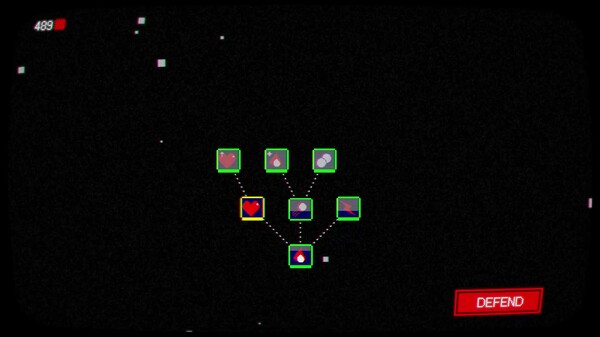
Your balls are the core progression path. Upgrading them changes how they interact with bricks, how many balls you have in play, and how effective they are at damaging nodes. Unlocks are tied to the resources you collect, and the game tracks stats so you can see which strategies are actually working.
The single-player campaign is built around these upgrades. There is no co-op or multiplayer to fall back on, so every run is about tuning your ball setup to the current board state.
Ball count upgrades are powerful but can overextend you if you cannot keep track of multiple angles.
Damage upgrades shorten fights against nodes and reduce time spent inside their fire zones.
Resource-related upgrades smooth out the economy and let you hit mid-game milestones earlier.
Mid-game goals: pacing, risk, and pushing back the nodes
The mid-game is where Bit Breaker separates clean clears from runs that stall out. Node pressure ramps up, brick layouts become less forgiving, and the temptation to greed for resources grows. Pacing is everything: push too slowly and the nodes entrench; push too fast and you get swarmed while your balls are still under-upgraded.
A sustainable mid-game rhythm looks like this:
Clear a safe pocket around your paddle before expanding outward.
Take out the closest active node, then collect the resources it leaves behind.
Upgrade before crossing into a new cluster, even if the upgrade is a small one.
Treat failed pushes as information about which upgrade path was under-invested.
Risk management is the real skill. The board state changes every time you break a brick, so the best upgrade is often the one that fixes your current weakness, not the one that inflates your strongest stat.
Save anytime and accessibility options for smooth play
Bit Breaker supports Save Anytime, so you are never locked into a long session. This pairs well with the short run structure: you can stop between encounters and resume exactly where you left off, making it easy to play in short bursts.
Several accessibility options are worth setting before a serious run:
Camera Comfort options reduce motion-related discomfort from fast ball movement and screen shake.
Custom Volume Controls let you balance sound effects and music independently, which helps you hear node shots as they telegraph.
Playable without Timed Input ensures the game does not demand precise reaction windows, so you can play at your own pace.
Partial Controller Support with DualShock and DualSense controllers is available if you prefer a gamepad over keyboard and mouse.
Use Save Anytime before attempting a high-risk node push. If the mid-game cluster does not go your way, reloading from a calm state is faster than rebuilding a wasted run.