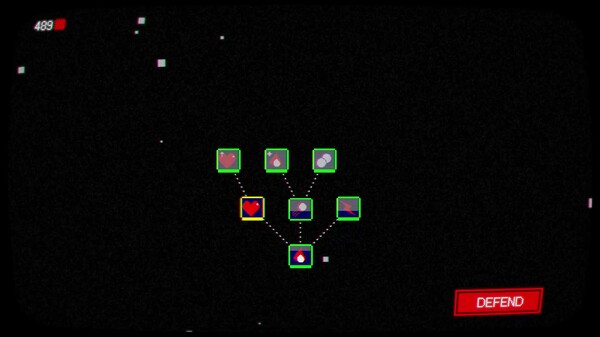
Bit breaker lore explained
Setting and world: humanity vs the nodes

Source: Steam
Bit Breaker places you in a world where nodes are taking over humanity. The premise is simple but deliberate: a systematic, spreading takeover rather than a single alien invasion or monster attack. The "nodes" feel like a network intelligence, something that grows by connecting and converting, which is why the game frames the fight as a resistance instead of a rescue mission.
The world itself is communicated through the game's short, focused run. There is no sprawling map or hub town. What you get is the arena of conflict itself: bricks that form the structures of the node takeover, and the bullet patterns that show how entrenched the enemy has become. The setting is essentially the front line, and everything about the presentation supports that idea.
Key world details to keep in mind:
The takeover is ongoing: you are fighting back, not cleaning up after a finished war.
The conflict is humanity vs the nodes, with no neutral third faction mentioned in the game's official details.
Your tools are balls that you upgrade, meaning the resistance relies on improvised weaponry.
The game is single-player, so the story is built around one player's effort, not a squad or army.
Because the game combines brick-breaking, incremental progression, and bullet hell mechanics, the world is less about written lore and more about what the gameplay says about the war. The bricks are the node's territory. The bullets are its retaliation. Every cleared screen is ground reclaimed.
Main story beats: from brick-breaking to the node uprising
The story beats of Bit Breaker are told through escalation. The game starts with the basic act of destroying bricks, which reads as breaking through the node's outer structures. As you collect resources, you reinvest them into upgrades, which is the incremental layer of the story: your resistance literally grows stronger the longer you survive the fight.
Then the bullet hell element enters. The nodes do not just sit there as bricks; they fire back with dense, patterned attacks. This is the uprising in action. The uprising is not a background event, it is the pressure you feel on every run. Since the game is a short experience, the story beats are compressed: establish the takeover, push back, and escalate until the resistance becomes overwhelming.
The progression loop as story:
Collect resources from broken bricks to fund the fight.
Upgrade your balls to deal with thicker node formations.
Survive the bullet patterns as the nodes retaliate harder.
Push through each stage until the node presence breaks.
That loop is the plot. The "node uprising" is what turned the world hostile, and the brick-breaking is your counter-offensive.
Nodes are taking over humanity, and the player must collect resources and upgrade their balls to fight back.
Characters and factions: the player and the node takeover
Bit Breaker does not hand you a named hero, and the official details do not list named characters. Instead, the cast is made of two forces:the player and the nodes.
The player is framed as the one who must fight back. There is no faction system, no allies, and no dialogue trees. The role is defined entirely by action: you are the person who picks up the fight against the takeover. The fact that the game is single-player reinforces this lonely resistance angle. It is one defender against a spreading network.
The nodes are the antagonistic faction. They are described as taking over humanity, which is a different threat model than destroying it. A takeover suggests conversion, control, or assimilation. The nodes are less a monster and more a hostile system, and their presence is shown through everything you break and every bullet you dodge.
Character and faction takeaways:
The player's identity is left open, so the story works for any player.
The nodes are collective and systematic, not a single boss villain.
Upgrading your balls is the player's only real character progression in the story.
There is no co-op and no multiplayer, so the resistance is always a solo effort.
Since the game is short, treat each run as a story beat instead of a score chase. The early waves are the takeover taking hold; the later waves are the turning point where your upgraded balls finally outmatch the node patterns.
Open questions and lore gaps
Because Bit Breaker has a compact premise, it leaves several questions open. This is not a flaw, it is part of the package. The lore is delivered through atmosphere and mechanics, so the gaps are where players tend to fill things in. Still, it helps to know what the game does not answer.
Big open questions:
Where did the nodes come from? The premise says they are taking over, but not why they appeared or what they want.
What does "taking over" actually mean? The game never shows whether this is physical conquest, digital control, or something else.
Who is the player? No background, name, or faction is given to the protagonist.
Is the fight won? A short arc can end on a victory, a stalemate, or a loop; the ending is left for players to interpret.
The lack of explicit answers actually fits the design. The game is a brick-breaking incremental bullet hell, and every one of those genres talks through motion and numbers rather than text. The resource collection, the upgrade curve, and the escalating bullet density tell the whole story of a resistance that starts weak and becomes unstoppable.
If you want to get the most lore out of a short playthrough, pay attention to the escalation. Each upgrade tier is a chapter. Each new bullet pattern is the nodes raising the stakes. The story of Bit Breaker is the story of that escalation, from the first broken brick to the final surging swarm.
Frequently Asked Questions
What is the setting of Bit Breaker?
The world is being taken over by nodes, a network intelligence that spreads by connecting and converting. You are placed on the front line of an ongoing resistance rather than cleaning up after a finished war.
Who are the two sides in the conflict?
The conflict is humanity versus the nodes, with no neutral third faction mentioned. You play as the human resistance, fighting against the node takeover.
Is there a named protagonist or other characters?
No, the game doesn't feature a named hero or any named characters. The cast consists of two forces: the player and the nodes.
How is the story told in Bit Breaker?
The story is told through gameplay rather than written lore. Breaking bricks represents reclaiming node territory, bullet patterns show the nodes' retaliation, and every cleared screen is ground reclaimed.
What is the node uprising?
The node uprising is the event that turned the world hostile, as nodes take over humanity. It isn't a background event; you feel its pressure through dense, escalating bullet patterns in every run.
Is Bit Breaker a single-player story?
Yes, the game is single-player, so the story is built around one player's effort rather than a squad or army.
What is the progression loop as it relates to the story?
The loop acts as the plot: collect resources from broken bricks, upgrade your balls, survive harder bullet patterns, and push through stages until the node presence breaks.